

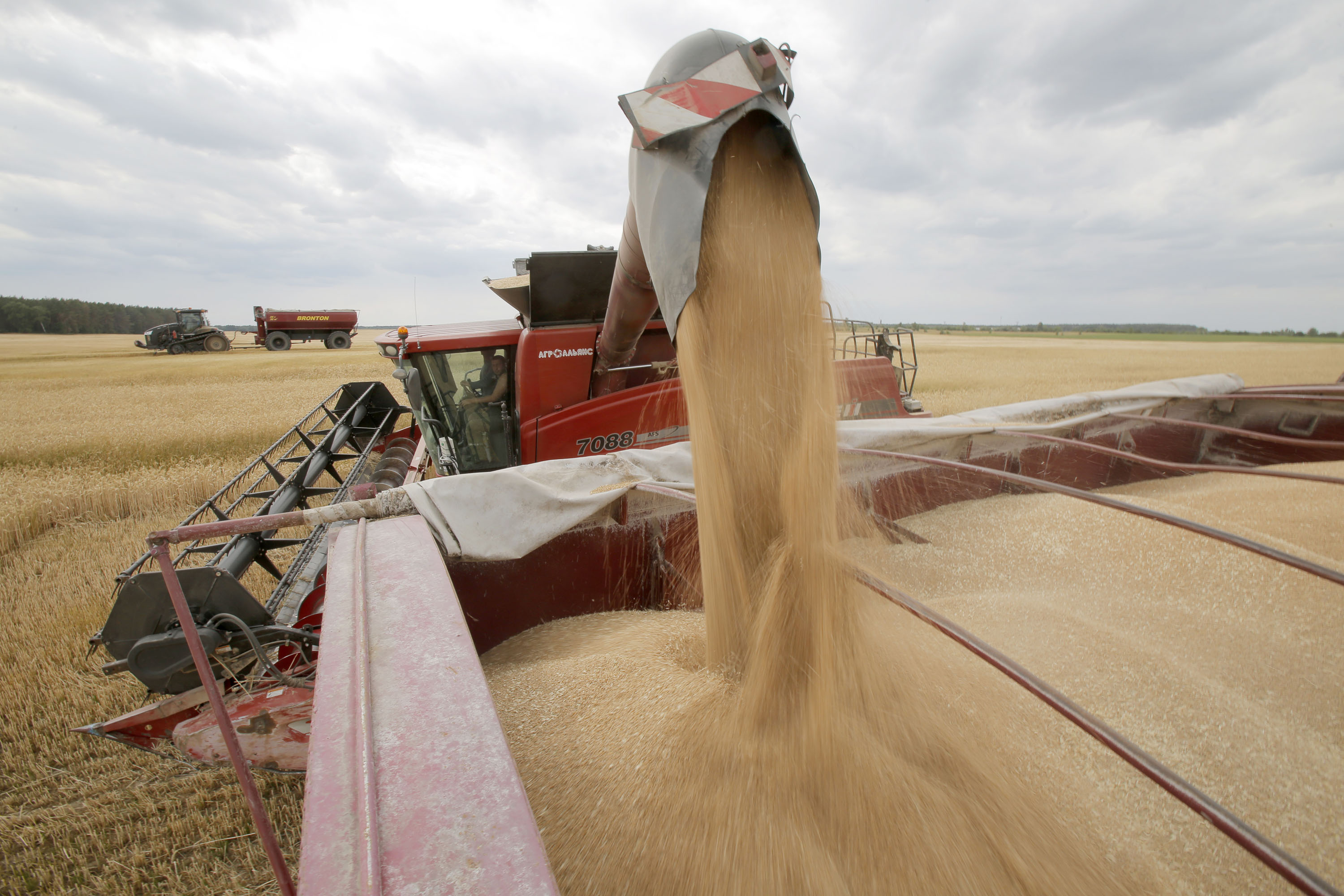
Due to intensified Russian attacks on port infrastructure in August, Ukraine exported around 1.7 million tonnes of agricultural products via alternative routes, representing approximately one-third of its potential export volume.
Agriculture and Food Minister Taras Vysotskyi said this, according to the Ministry of Agrarian Policy and Food.
At the same time, the minister noted that Ukraine has sufficient food production and a wide range of products to meet domestic demand.
“In terms of the production volumes available to us and the overall supply balances, no long-term shortages are currently expected for any type of product. Logistics have become more diversified. In some cases, the traditional ‘producer – large warehouse – shop’ model remains in place, but supply chains such as ‘producer – small warehouse – shop’ or direct ‘producer – shop’ deliveries are increasingly being used,” Vysotskyi said.
According to him, a similar approach is being applied to imported products. Logistics through border crossing points continue to operate, meaning that no long-term shortages of imported food products are currently expected either.
Vysotskyi said that around 70–80% of food products, excluding grains and oilseeds, are consumed domestically. At the same time, Ukraine continues to export a wide range of products, including cereals, frozen foods, sugar, vegetable oil, dairy products, eggs and certain types of fruit.
According to the minister, changes to logistics chains could result in an overall increase in food prices of around 2.5%. However, final retail prices may also be affected by other factors, including the cost of fuel, energy and animal feed.
The Ministry of Agrarian Policy and Food therefore continues to monitor the price situation.